As you embark on your journey to learn Spanish you will come across many books. Hundreds of books. Thousands of books. And I know this can be VERY overwhelming.
So today I’d like to share with you the best Spanish textbooks for beginners, which will help you learn Spanish from scratch. These recommendations are made as a professional Spanish tutor for over 10 years. They, of course, reflect my teaching style and preferences, so they might not be for everyone, but I have found them extremely useful and so I thought I’d share them with you.
But first things first, let’s talk about which type of textbooks to AVOID.
Type of books to AVOID
I won’t go into finger-pointing, but I would highly recommend AVOIDING any book with things like “Complete guide” or “Step-by-step” in the title. Here is why:
- They often promise certainty in something that isn’t linear. Language learning is not a set of rules you just memorize and then, bam, you’re done. It just doesn’t work that way,
- They focus too much on rules, not use. These books usually lean hard on grammar explanations and drills, with very little real-world language, interaction, or context.
- They oversimplify the process. Spanish isn’t a checklist. You don’t “finish” the language by completing steps. Real learning is messy, repetitive, and circular.
All this to say… these types of books aren’t evil, they just give you false hope and create a lot of innecessary stress.
So here are, instead, some books I’d highly recommend buying for Spanish learners who start from scratch.
1- Aula 1: a communicative approach
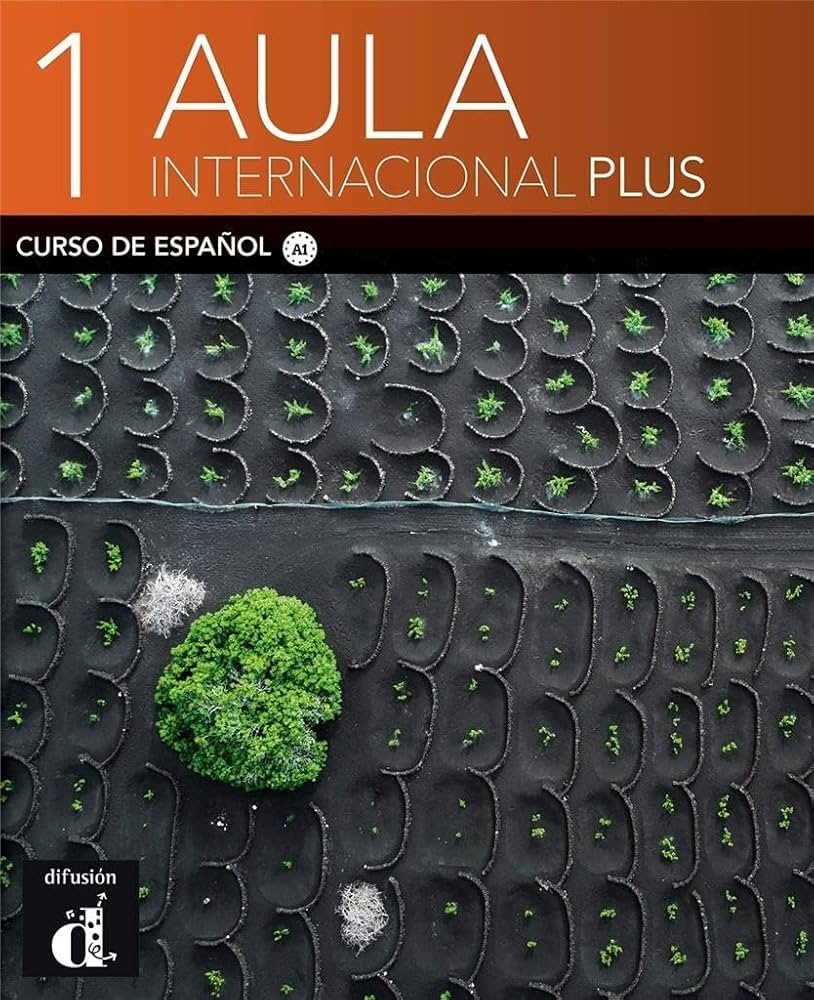
With dynamic and useful exercises, it’s no wonder this book is used in the Instituto Cervante’s classrooms around the world. It can be bought with instructions in English, which simplifies access to new learners.
PROS: It’s visual, created around real-life situations and quite dynamic. You will also get access to listening and video exercise which are very helpful.
CONS: it progresses quite fast so it’s important to practice a lot with the exercise book that comes with it and probably extend your practice with a professional tutor.
NOTE: If you live outside of Spain, use Aula Internacional (pictured above), if you live in Spain, you can use Aula Plus (it includes activities to do in your daily-life and focuses on the Spanish variant from Spain).
2- Aprende gramática y vocabulario
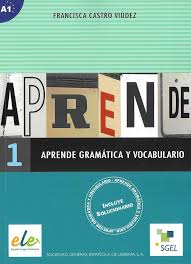
Ok. I just said that some books “focus too much on rules, not use”. If, however, you are more “school oriented”, and like that kind of structure help you, not all books should be tossed out just becase they focus on grammar.
PROS: I would highly recommend the series “Aprende gramática y vocaublario” by SGEL. These books include a short and visual explanation of each topic, along with practical exercises and answers to all questions. It’s a great companion if you wan to review specific topics.
CONS: it doesn’t include much listening and no videos.
3- En marcha

A good mix of both types (communicative + grammar / vocab) is En Marcha. It can be useful to guide you in your learning if you prefer a bit of grammar while maintaining the “real-life” feeling you get in Aula.
PRO: This book is structured around short units that revolve around a daily topic (asking for the time, greeting someone). And, let’s face it, it’s price is great compared to Aula.
CONS: it can include quite a lot of topics per unit, so sometimes they are not very well linked together and the use of grammar and vocabulary can be quite advanced for an absolute beginner.
So these are some of the books I use for beginners in my Spanish lessons. What about you? Do you have a favorite Spanish textbook to learn Spanish from scratch? Let me know in the comments!